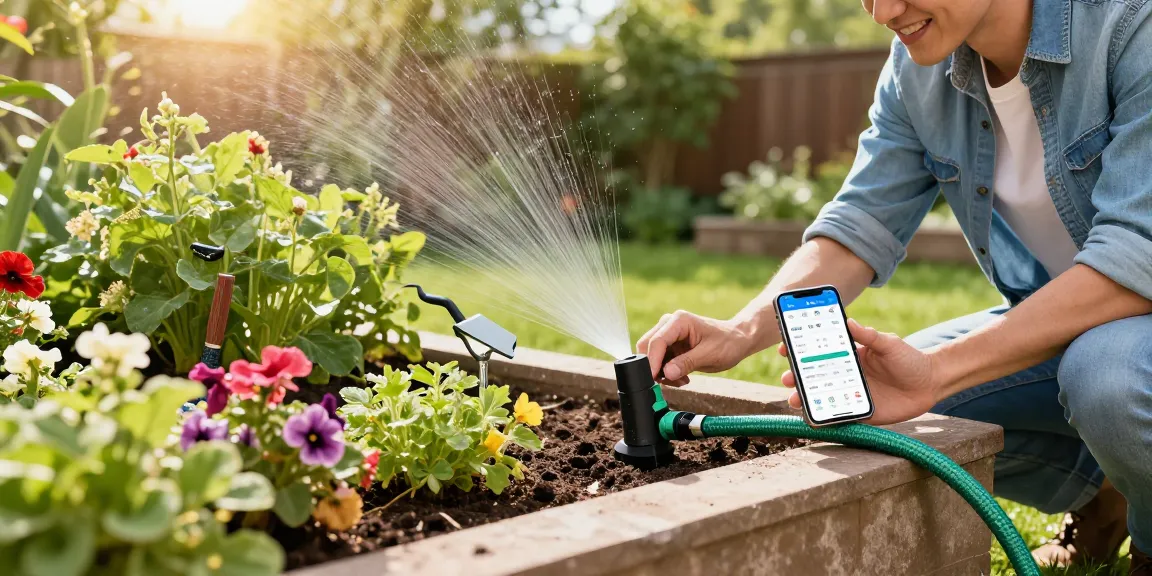
When Sarah noticed brown patches spreading across her 1/4-acre front lawn in Phoenix, she blamed the heat—and ended up watering every evening with a garden hose. The lawn looked soggy but didn’t recover; grass pulled up easily and the sprinkler runoff puddled in the driveway. That’s the kind of real-world mess this guide fixes: a clear problem followed by the right setup and schedule to stop waste and restore a healthy lawn.
1. Diagnose the watering problem, then pick the right approach (problem → solution)
Before you change times or crank up the flow, identify what’s actually wrong. Common problems and the setups that fix them:
- Uneven coverage — dry spots next to lush areas: use a zone-based system. For small yards, mobile oscillating sprinklers or soaker attachments work; for larger yards, an in-ground smart controller with multiple zones is ideal.
- Runoff and puddling — water leaving the yard: slow the application rate. Shorten cycles and add soak cycles (cycle-and-soak) or switch to drip/soaker lines along beds.
- Shallow roots / wormy, weak turf — frequent shallow watering: switch to deeper, less-frequent sessions to encourage roots to go down 3–4 inches.
- High water bills — inefficient schedules or excessive runtime: adopt a smart timer or program adjustments based on season and rainfall.
Example: Tom has a 7,500 sq ft suburban lawn with three sprinkler zones and constant overwatering complaints from the city. The right solution: upgrade to a WiFi timer that adapts to local weather and splits each zone into shorter cycles. A WiFi timer such as the RainPoint model lets you set cycle-and-soak and skip irrigation automatically after heavy rain, cutting waste and keeping roots healthy. For detailed stepwise routines, many homeowners follow a lawn watering schedule that actually works to match their yard size and climate.
2. Build a practical weekly schedule: durations, frequencies, and timing
There’s no one-size-fits-all schedule, but there are rules that apply everywhere. Name the challenge (climate, soil, slope), then set basics that work for most U.S. yards.
Key rules
- Water early morning between 4–8 AM to reduce evaporation and disease risk.
- Prefer deep, infrequent watering to shallow, frequent sprinkles; aim for 1–1.25 inches per week in most temperate regions.
- Use cycle-and-soak on slopes or compacted soils: several short runs separated by 30–60 minutes to let water infiltrate.
Sample weekly schedule by yard type (example figures based on soil type and EPA guidance):
Yard / SoilFrequencyRun Time per ZoneSandy soil, small lawn3×/week10–15 minutes per zone (repeat in 2 cycles)Loam soil, average lawn2–3×/week20–30 minutes per zone (1–2 cycles)Clay soil, large lawn or slope1–2×/week30–40 minutes per zone broken into 3 cycles
Concrete example: A 5,000 sq ft lawn on loam soil in Kansas should aim for two 30-minute runs for each zone on Tuesday and Saturday mornings, using cycle-and-soak if the sprinklers output more than 0.25 in/hr. According to EPA WaterSense, smart controllers can reduce outdoor water use by up to 15% or more compared with conventional irrigation, which translates into substantial savings for larger yards (EPA WaterSense program).
3. Match equipment to the challenge: right tool, right yard
Now that you know the schedule basics, match them to the physical setup. Here are common scenarios and the best solutions.
Small lawn or rental property
Problem: You need an inexpensive, flexible system for a small turf area. Solution: DIY mobile sprinklers or soaker hoses on timers. Example: A homeowner with a 600 sq ft front yard can use a portable oscillating sprinkler on a simple plug-in timer; set two 15-minute sessions three times a week.
Large lawn with multiple zones
Problem: Different zones need different runtimes; you want remote control. Solution: In-ground valves controlled by a smart WiFi sprinkler timer. Example: A 10,000 sq ft property with four zones benefits from a smart controller that trims watering after a rainy week and adjusts for evapotranspiration — a WiFi timer from RainPoint can handle that schedule automatically, saving time and reducing waste.
Vegetable garden and flower beds
Problem: Plants need precise, root-level moisture without wet foliage. Solution: Drip irrigation or soaker hoses with separate lines and run times. Example: A raised bed with tomatoes responds well to 20–30 minutes of drip per day during fruiting, or less frequent deep watering depending on soil.
4. Monitor, tweak, and fix common mistakes
Even a well-designed plan needs tuning. Name the problem, then take the targeted action.
- Problem: Brown spots that persist after tweaking schedule. Solution: Check sprinkler alignment, nozzle wear, and soil compaction. Replace mismatched nozzles or re-angle heads. Test distribution uniformity by placing cups across the zone for a 15-minute run to measure inches per hour.
- Problem: Lawn looks wet but pulls up easily (shallow roots). Solution: Reduce frequency, increase single-run depth. Switch from daily short bursts to two deep sessions weekly.
- Problem: High bills but no visual benefit. Solution: Audit the system. Leaks, broken heads, or overlapping zones are common culprits. A quick pressure test and head-by-head inspection often reveals the waste.
Practical measurement example: Place five flat containers across a sprinkler zone, run the station for 15 minutes, then measure the depth with a ruler. If you collect 0.2 inches in 15 minutes, that’s 0.8 inches/hour; plan run times to meet your weekly 1–1.25 inch target.
Many homeowners find that pairing a clear schedule with the right hardware and occasional checks is enough. If you want step-by-step presets and seasonal adjustments laid out for your specific yard, see how others follow a lawn watering schedule that actually works for different climates and yard sizes.
5. Seasonal adjustments, monitoring, and saving water
Water needs change across the year. Name the season-related problem, then apply the correct tweak.
- Spring: Early growth needs moderate watering. Run 2×/week and adjust after rain.
- Summer: Peak ET (evapotranspiration). Increase depth but avoid daily shallow sprays; use smart adjustments or add runs if soil is very sandy.
- Fall: Reduce frequency as growth slows. Start a gradual cutback 4–6 weeks before dormancy.
Real figure: According to many university extension services, most cool-season grasses require about 1–1.25 inches per week in peak summer; warm-season grasses often need slightly less during high heat if deep-rooted (consult your local extension for exact regional numbers). A smart controller will adapt better than a static program, trimming unnecessary cycles after rain and saving both water and money.
One more practical tip: install a soil moisture sensor for high-value areas like turf near the house or newly seeded spots. It’ll prevent wasted runs and speed recovery. For homeowners who want automation combined with weather-based adjustments, a smart WiFi controller by RainPoint pairs well with sensors and separate lines for beds, making the routine truly hands-off while still precise.